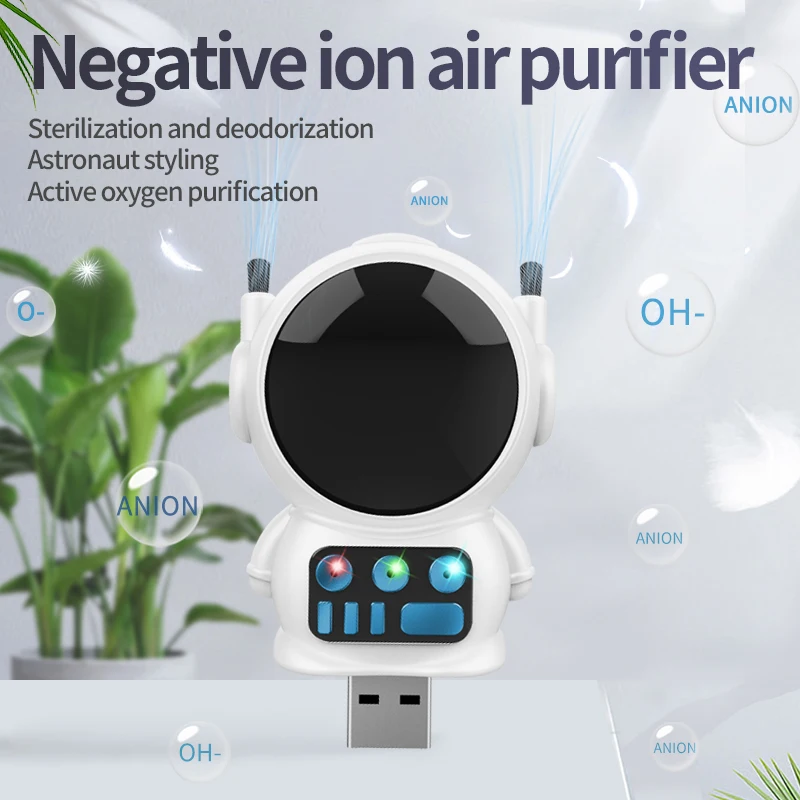
Many small and cheap air purifiers advertise negative ions, anions or plasma. They sound healthy, but ionizers are not the same as filters, and some produce ozone. This guide explains how they work and what to look for.
It is not medical advice. If you have asthma or another respiratory condition, ask a doctor before using any device that changes the air.
How an ionizer works
An ionizer charges the air so that particles pick up an electric charge and stick to surfaces such as walls, floors and furniture. The particles are not removed from the room. They are moved onto things that you then have to clean.
Some designs use a collector plate or a filter to capture charged particles, which is better.
Why ozone is the issue
Some ionizers and plasma units produce ozone as a by-product. Ozone is a lung irritant, and indoor exposure is something regulators advise limiting. The more powerful the ion output, the higher the risk.
A sharp, electric or chlorine-like smell around the unit is a warning sign. Stop using it and ventilate the room.
What to look for in a listing
Prefer a unit with a HEPA filter as its main cleaning method. If it has an ionizer, look for an ozone-free statement and an option to switch the ionizer off. Avoid products that advertise ozone as a feature, as a 'sterilizer' or as a way to remove smells.
Be cautious with very cheap units that make strong claims and give no specifications.
Where an ionizer is a poor choice
Avoid an ionizer in a bedroom, a small closed room or a room used by children, pets or people with respiratory conditions, unless it is clearly ozone-free and switchable.
If you want to clean the air, a filter-based purifier is the more reliable approach.
Safer alternatives
A HEPA purifier with a carbon layer handles particles and odours without creating ozone. For a desk, choose a small unit with a real filter. For a car, a cabin filter and a clean interior are the first step.
Frequently asked questions
Do negative ion air purifiers work?
They can make particles settle on surfaces, which can make the air seem cleaner, but the particles are not removed. A HEPA filter removes them from the room.
Do all ionizers produce ozone?
No, but some do. Look for an ozone-free statement and avoid using an ionizer if you notice a sharp smell.
Is an ionizer safe for babies?
Ask a doctor. In general, prefer a filter-based purifier for a baby's room and avoid devices that may produce ozone.