Haze in Singapore usually comes from regional fires and tends to peak between August and October. When the PSI rises, searches for air purifiers spike and shops sell out. Buying early and choosing well is better than panic-buying a unit that cannot cope.
This guide explains what a purifier can do during haze, what to look for in a listing and how to set it up. It is not medical advice. Follow the guidance on health and masks from the National Environment Agency and the Ministry of Health.
What is in haze, and what a purifier removes
Haze is mainly fine particles, known as PM2.5, along with some gases and smoke odour. A purifier with a HEPA filter can capture fine particles from the air in a room. An activated carbon layer can help with smoke smell, though thin sheets fill up fast.
A purifier does not remove all gases, and it does not clean the air outside. It reduces particles in the room where it runs.
Why a closed room matters
A purifier can only clean the air it pulls in. If windows and doors are open, new haze enters as fast as the unit removes it. Close the windows, shut the bedroom door and run the air conditioner if you can.
Pick the room where you spend most time, usually the bedroom, and put the purifier there before buying a second unit for the living room.
Which specifications matter in haze
Look for a HEPA filter with a stated grade (H13 if possible), a CADR large enough for the room (at least five air changes an hour in haze) and a sealed housing. For a 12 m² bedroom with a 2.6 m ceiling, that means about 155 m³/h. For a 20 m² living room it means around 260 m³/h.
A PM2.5 display or sensor is helpful because it shows when the air has improved and lets auto mode slow the fan when it is no longer needed.
Do not fall for ozone and ionizer claims
During haze, some listings push ionizers, plasma and 'active oxygen'. These can create ozone, which irritates the lungs, and they are not substitutes for a HEPA filter. Prefer a unit that relies on a filter, and look for an ozone-free statement if any ion function is present.
Set it up and keep it working
Run the purifier on a higher speed when the PSI rises, and drop to a lower speed once the room is clean. Leave 20 to 30 cm of clear space around it. Wipe the pre-filter every two weeks in haze season, because it clogs faster, and be ready to replace the main filter earlier than the usual 6 to 12 months.
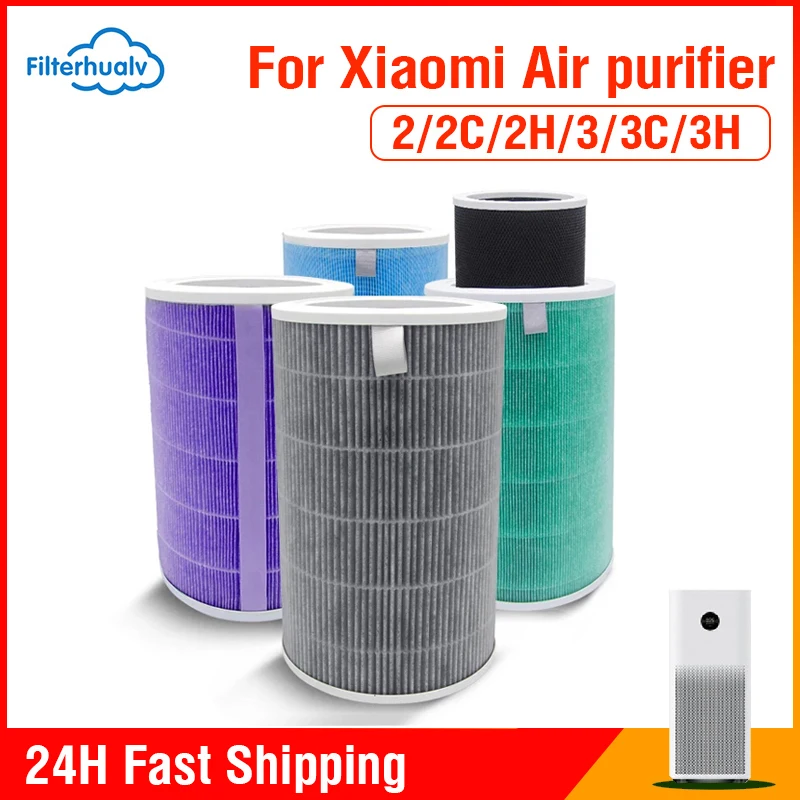
Keep a spare filter at home before the season starts. Delivery from overseas can take days, and filters sell out in a haze.
Check official readings
The National Environment Agency publishes the PSI and PM2.5 readings for Singapore. Use those readings, not the sensor on a cheap purifier, to decide what to do. The sensor on a purifier is useful for trends inside the room, but it is not a calibrated instrument.
Frequently asked questions
Can an air purifier protect me from haze?
It can reduce fine particles in the air of a closed room, which helps lower your exposure indoors. It does not replace official health advice, and it does not clean the air outside.
What CADR do I need during haze?
Aim for five or more air changes an hour. Multiply the room volume in m³ by five. A 31 m³ bedroom needs about 155 m³/h, and a 52 m³ living room about 260 m³/h.
Should I run the purifier all day in haze?
Many people run it continuously on a low or auto setting when the PSI is elevated, and on a higher speed when it spikes. Check the manual for the recommended use.
Is an N95 mask still needed indoors?
That is a health question, so follow the advice from NEA and the Ministry of Health, which changes with the PSI level.